
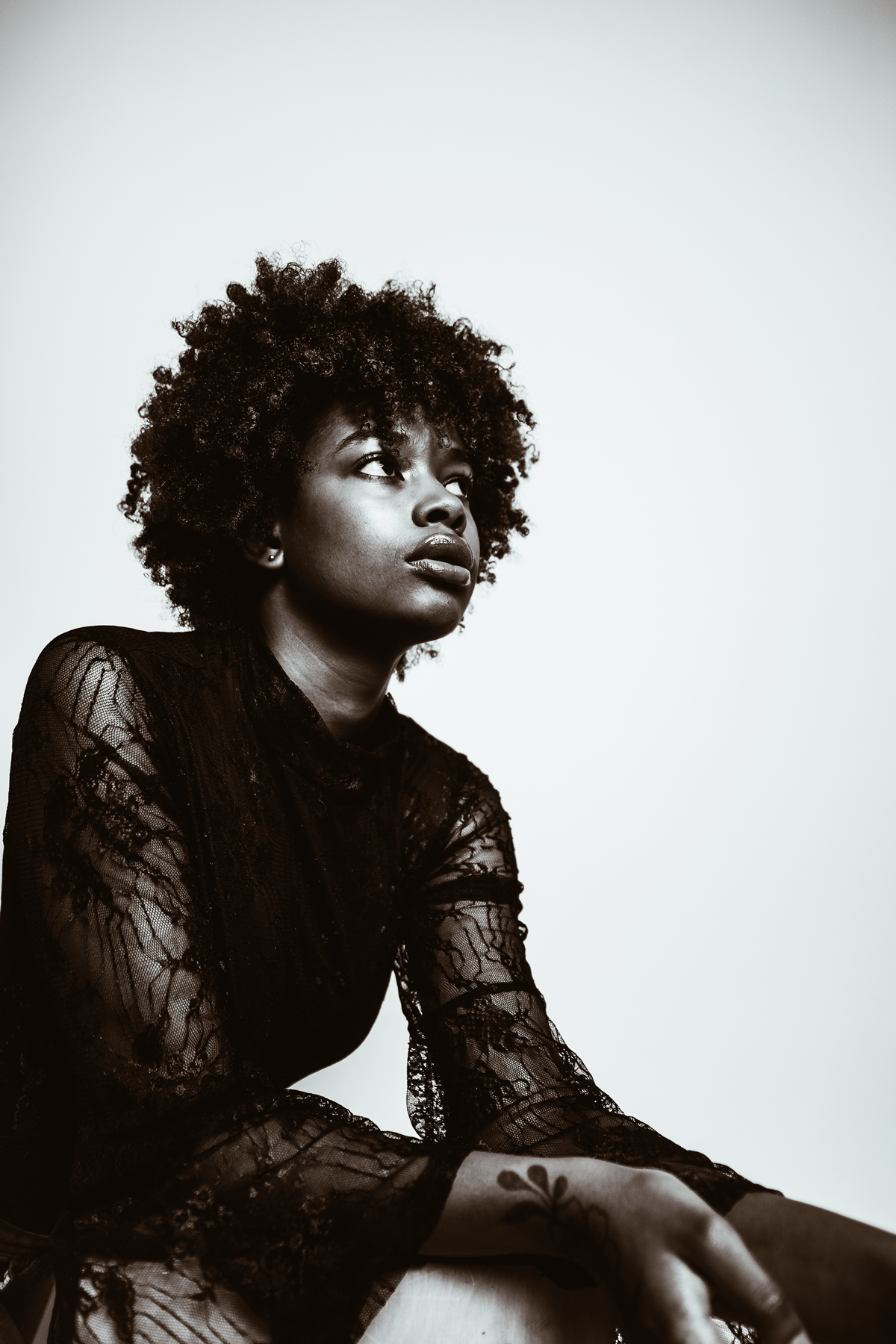
The insults directed at Black women are often dismissed as casual opinions, jokes, or personal conflicts. They are much more serious than that. Many of these labels come from a long history of systemic racism and misogyny that has sought to keep Black women marginalized and misunderstood.
There is something important that must be understood from the beginning: the stereotypes aimed at Black women are not new. Words like “loud,” “manly,” “ghetto,” “angry,” “ugly,” or “not smart” may sound like modern insults, but they are rooted in a much older pattern of racism and sexism.
These ideas were manufactured, repeated, and passed down for generations. They are part of what we now call misogynoir: anti-Black misogyny directed at Black women and people perceived as Black women.1 These stereotypes were not accidental. They were created to strip Black women of dignity, femininity, intelligence, beauty, and protection.
The danger is that many people repeat these ideas without understanding where they came from. They treat them like personal opinions, when in reality they are part of a long-standing cultural structure designed to place Black women beneath others.
The attacks may feel louder today because they are more visible. Social media records them, spreads them, and rewards them with attention. But the engine behind them is old. Once you understand that engine, it becomes much harder to ignore.
The Foundation: Womanhood Defined by Contrast
In America, the image of the “ideal woman” was historically built around whiteness. She was presented as delicate, pure, soft-spoken, virtuous, beautiful by default, and in need of protection. But that image could not exist alone. To define one woman as pure, someone else had to be labeled impure. To define one woman as delicate, someone else had to be labeled rough. To make one standard of beauty appear natural, another had to be called ugly.
Black women were assigned that opposite role. White femininity did not simply develop beside the tearing down of Black women. It was strengthened by it. Black women became the negative space used to define someone else’s value.
That is why these stereotypes continue to feel so persistent. When people participate in tearing Black women down, whether they realize it or not, they are helping maintain an old social hierarchy. This is not just about individual personality flaws. It is structural racism.
The Labels Were Created to Devalue
Every insult has a purpose. The “ugly” stereotype did not appear by accident. During slavery, sexual violence against enslaved Black women was widespread, and white society created false narratives to justify that violence.2
One of those narratives portrayed Black women as hypersexual, always available, and undeserving of the protection given to other women. This lie helped excuse abuse while also preserving the image of white women as the pure, innocent opposite.
After slavery, beauty standards rooted in European features became the social default. Straight hair, lighter skin, thinner lips, and narrow features were elevated as the standard of beauty. Everything associated with Blackness was pushed to the margins. So when Black women are called “ugly,” that insult is not simply about appearance. It is a form of enforcement.
The contradiction is clear. The same features mocked on Black women—full lips, curves, braids, darker skin, and cultural style—are often praised when copied, purchased, or performed by others. What is labeled “too much” on Black women becomes fashionable once it is separated from them.
The labels “loud,” “ghetto,” and “angry” also serve a purpose. They move attention away from what was done to a Black woman and focus instead on how she responded. Rather than addressing the disrespect, mistreatment, underpayment, or exclusion she experienced, people criticize her tone. Her reaction becomes the offense, and the original harm disappears.
The word “ghetto” carries its own history. During the Great Migration, millions of Black families moved from the South to northern, midwestern, and western cities seeking opportunity. Yet housing discrimination, restrictive covenants, redlining, and segregation often forced Black communities into restricted neighborhoods.3 The conditions were created by policy, then the culture that grew out of those conditions was mocked and turned into an insult.
The claim that Black people are “not smart” has also served a purpose. It has been used to justify denying access to education, wages, leadership, and institutions. If a group can be falsely labeled intellectually inferior, exclusion becomes easier to defend. The lie becomes a tool.
For Black women, this stereotype is especially damaging because it combines racism and sexism. Black women have often been expected to work hard, carry communities, solve problems, and produce results while still being denied recognition for their intelligence and leadership.
Weaponized Vulnerability and the Women’s Movement
There is another part of this history that must be addressed: the way white womanhood has often been protected through the punishment of Black people. For decades, the supposed protection of white women was used as an excuse for racial violence. The murder of 14-year-old Emmett Till in 1955 remains one of the most painful examples of how an accusation could place a Black life in danger.4
That pattern did not disappear; it simply changed form. Today, many people have seen videos of white women calling the police on Black people for ordinary activities—family barbecues, entering apartment buildings, sitting in public spaces, or simply existing where they were not expected to be.5
In these moments, fear becomes a performance, and the system often responds as if that fear is automatically valid.
Even the history of women’s rights in America is tangled in racism. The hypocrisy was clear: some white suffragists demanded equality for themselves while supporting, tolerating, or benefiting from systems that denied equality to Black women. They argued that women deserved a political voice, yet they often treated Black women as a threat to that very movement.
Some white suffragists even used racist appeals to gain support for white women’s voting rights. Ida B. Wells, one of the nation’s most important anti-lynching journalists and suffrage advocates, was asked to march at the back of the 1913 Woman Suffrage Procession so white Southern marchers would not be offended. She refused.6
Sojourner Truth’s famous 1851 speech, remembered as “Ain’t I a Woman?”, speaks to that same reality. She had to argue for her womanhood in a room dedicated to women’s rights. That should tell us something: a movement claiming to fight for women could still exclude Black women from the very definition of womanhood.7
By Calling It What It Is, We Control the Narrative
Black women scholars and activists have long named what others tried to ignore. The Combahee River Collective explained how race, gender, class, and sexuality can intersect in the lives of Black women.8 Kimberlé Crenshaw gave legal and academic language to intersectionality, helping explain how overlapping systems of discrimination work together.9
Patricia Hill Collins wrote about “controlling images” such as mammy, Jezebel, Sapphire, and welfare queen, showing how stereotypes are used as tools of control.10 Moya Bailey gave language to misogynoir, the specific anti-Black misogyny directed at Black women.1
Defining the evils of this system matters. When something isn’t defined, it is easier to ignore, dismiss, or deny. But once it is defined, it can be studied, challenged, and resisted.
Black women have always known the experience was real. Now is the time to expose it and confront it.
Why It Feels Louder Now
Many people ask why the attacks on Black women feel stronger today. There are several reasons.
More of it is being recorded.
The behavior is not necessarily new; the visibility is. The room did not suddenly become hostile. The room simply got a microphone and a camera.
Black women are more visible.
Black women are leading, building, organizing, creating, voting, launching businesses, and shaping culture. When a group that was expected to remain beneath others begins to rise, the people invested in the old order often become louder.
Outrage is monetized.
The internet turns conflict into engagement. Content that tears Black women down is often rewarded with clicks, comments, shares, and attention. The insult is no longer only social. It is profitable.
Not every person who repeats these ideas does so knowingly. Many people inherit scripts they never examine. But unconscious participation does not erase responsibility. The people who knowingly use these stereotypes are dangerous. The people who repeat them without thinking are often the majority. Both keep the system alive.
Refuse to Be Reduced
The hierarchy only works when people accept it, including those harmed by it. It depends on Black women internalizing the message. It needs them to shrink. It needs them to believe they are too loud, too difficult, too much, not beautiful enough, not smart enough, or not worthy enough.
When a Black woman absorbs that message and makes herself smaller, she is not the problem. She is proof that the system is working exactly as designed.
But a Black woman who refuses the lie becomes powerful in her truth. A Black woman who defines her beauty on her own terms stands in freedom. A Black woman who speaks with confidence carries her voice with purpose. A Black woman who builds wealth, influence, education, business, community, and joy without asking permission becomes a living example of strength and possibility.
As a Black woman, you are life-giving, culture-shaping, and powerful beyond measure. You do not have to prove your worth to anyone. Your existence already tells the truth.
Don’t Let the System Define You
For much of history, contempt was backed by hard power. It could deny a job, a loan, a vote, a seat in a school, or access to public life. The insult was connected to material consequences.
Today, Black women still face discrimination, but many also have platforms, businesses, education, voting power, cultural influence, and economic independence. They cannot be pushed back down as easily as before.
So what remains? Noise. The tearing-down content. The endless commentary. The insults. The attempts to make Black women doubt themselves. The effort to exhaust them emotionally.
The volume has gone up because the leverage has gone down. The noise is not proof that the system is winning. In many ways, it is proof that control is slipping.
What’s Next?
There is no simple solution that will make everyone stop spreading harmful stereotypes. Freedom cannot depend on the behavior of people committed to misunderstanding you. A better question is not, “How do we make them stop?” The better question is, “How do we stop living as hostages to their opinions?”
Take your attention back.
Attention is power. Do not feed content designed to degrade Black women. Refuse to let strangers on the internet become the jury over your worth.
Build materially.
Build wealth, skill, property, education, audience, business, expertise, and ownership. Self-knowledge protects you internally. Building protects you externally.
Move in formation.
Isolation is part of the design. Community is not just emotional support. It is strategy. A network is harder to dismiss than a woman standing alone.
Stop trying to convert people committed to misunderstanding you.
It is not your job to beg anyone for basic decency. Spend your energy on the people who already understand your humanity and the life you are building.
Becoming Free
The goal is not to win approval. The goal is not to defeat every person who repeats the lie. Both keep your attention fixed on them.
The goal is to live a life so fully your own that their opinions become weather: present, maybe loud at times, but not in control.
Together is how we win.
JAMii exists to tell stronger stories, build local visibility, and connect communities with Black-owned and minority-owned businesses.
Footnotes & Sources
- Merriam-Webster defines “misogynoir” as hatred of, aversion to, or prejudice against Black women, and its entry was updated with 2026 examples. Northwestern also documents Moya Bailey’s origin of the term and her description of it as anti-Black, racist misogyny toward Black women and people perceived as Black women. Merriam-Webster; Northwestern Now; Northwestern Magazine.
- Research on controlling images explains how stereotypes such as Jezebel, mammy, Sapphire, and welfare queen have been used to justify racism, sexism, poverty, and other forms of oppression. National Library of Medicine / PMC.
- The National Archives describes the Great Migration and notes that Black migrants faced restrictive covenants and redlining, while the Library of Congress notes exclusion in employment and housing. National Archives; Library of Congress.
- The Library of Congress explains that Emmett Till’s 1955 murder brought national attention to racial violence and injustice in Mississippi. The Smithsonian National Museum of African American History and Culture also documents how the case helped inspire the Civil Rights Movement. Library of Congress; NMAAHC.
- PBS NewsHour and reporting on “Living While Black” document national incidents where police were called on Black people engaged in ordinary activities. PBS NewsHour; Vox.
- The National Park Service documents that Ida B. Wells-Barnett was asked not to march with the Illinois delegation in the 1913 Woman Suffrage Procession and refused that exclusion. National Park Service; NPS Teaching Suffrage.
- The National Park Service and Library of Congress provide background on Sojourner Truth’s 1851 women’s rights speech in Akron, Ohio, while noting that different versions of the speech exist. National Park Service; Library of Congress.
- The Combahee River Collective Statement explains Black feminism as a response to interlocking racial, sexual, heterosexual, and class oppression. BlackPast.
- Kimberlé Crenshaw’s 1989 article, “Demarginalizing the Intersection of Race and Sex,” critiques treating race and gender as mutually exclusive categories. Columbia Law Scholarship Archive; University of Chicago Legal Forum.
- Routledge’s current page for Patricia Hill Collins’s Black Feminist Thought lists the 2026 Routledge Classics edition and includes chapters on “Mammies, Matriarchs, and Other Controlling Images” and “The Power of Self-Definition.” Routledge.
Editorial note: This article is cultural commentary based on historical patterns, Black feminist scholarship, and the JAMii Our Story editorial voice. Source links were reviewed and refreshed on June 30, 2026.